

Love running, but finding that nagging pain in your feet keeps coming back? You are not alone. Foot discomfort is one of the most common problems runners experience, often indicating a deeper issue beneath the surface.
Conditions such as plantar fasciitis, stress fractures, Achilles tendinopathy, runner’s toe, and metatarsalgia can all develop from the repeated impact of running. These injuries are usually linked to overuse, wearing the wrong footwear, training too hard or too fast, or natural differences in the way your feet and legs move. The symptoms are not always the same for everyone. Some runners feel a sharp or stabbing pain, while others notice a dull ache, swelling, numbness, or even a change in their walking or running pattern as the body tries to protect the injured area.
In this article, we explore the most common running injuries, what causes them, and how a foot doctor can help to treat them.
Plantar Fasciitis

Plantar fasciitis is widely recognised as one of the most frequent running-related foot injuries. Because running places repetitive impact and continuous stress on the heels and arches, the plantar fascia is particularly prone to strain. Over time, this repeated loading can irritate the tissue and increase the risk of injury. It can lead to inflammation and the sharp heel pain many runners experience. The pain is often most noticeable during the first steps in the morning or after a run.
What are the symptoms
Plantar fasciitis usually presents as a sharp or stabbing pain under the heel. It’s most noticeable with the first few steps in the morning or after a period of rest. Many runners find that the discomfort eases slightly once they start moving. But the pain return or worsen after a run, especially when training on hard surfaces. Tenderness or tightness along the sole of the foot near the heel is also common. It makes uncomfortable to walk, jog, or stand for long periods.
What are the risk factors
- Sudden increases in running distance, speed, or training frequency
- Flat feet or high arches, which change how weight is distributed through the foot
- Wearing worn-out, unsupportive, or poorly fitted running shoes
- Tight calf muscles or Achilles tendons that increase strain on the plantar fascia
How is it treated
Treatment focuses on reducing stress on the affected tissue while supporting healing. Supportive footwear or custom orthotics can help improve foot alignment and reduce pressure on the heel. At our clinic, podiatry’s rehabilitation is provided to address underlying biomechanical issues, strengthen the lower limbs, and support a safe return to activity, particularly in persistent cases. Shockwave therapy may also be recommended to stimulate tissue repair and relieve long-standing pain.
Achilles Tendonitis
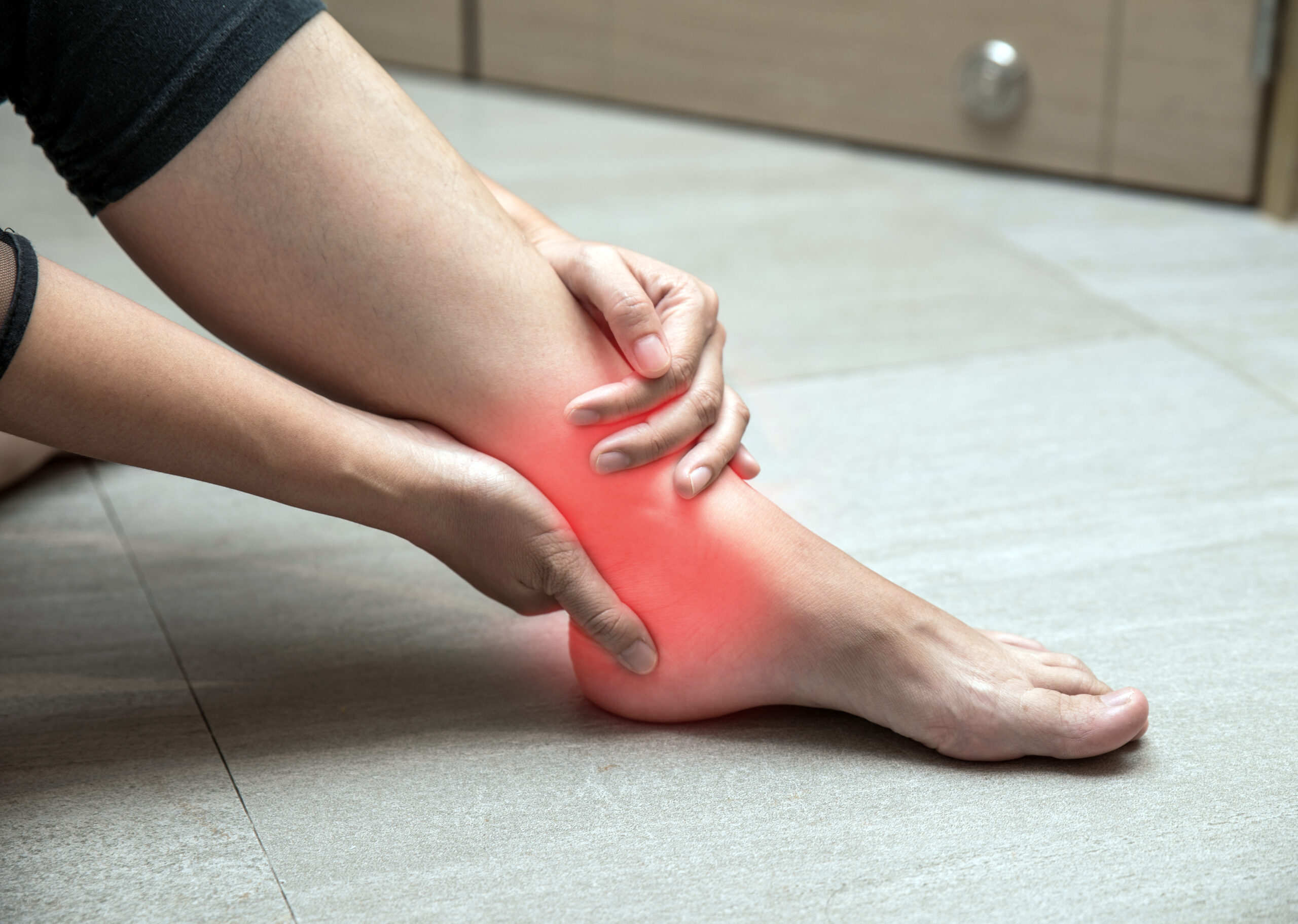
Achilles tendonitis is one of the most common overuse injuries seen in runners, especially those who train frequently or increase their mileage too quickly. The Achilles tendon connects the calf muscles to the heel bone and plays a crucial role in running by helping to absorb impact and generate forward movement. With repetitive loading from running, this tendon can become irritated and inflamed, leading to pain, stiffness, and reduced performance if left untreated.
What are the symptoms
Achilles tendonitis often starts as a dull ache or tightness at the back of the ankle, just above the heel. Runners may notice stiffness when taking their first steps in the morning or after sitting for a long time, which gradually eases with movement. As the condition worsens, pain may increase during or after a run, and the area can become tender, swollen, or warm to the touch.
What are the risk factors
- Sudden increases in running distance, speed, or hill training
- Tight or weak calf muscles that place extra strain on the tendon
- Worn-out or unsupportive running shoes, especially those with low heel cushioning
- Poor running mechanics or foot alignment issues
How is it treated
Treatment aims to reduce strain on the Achilles tendon while restoring strength and flexibility. This often includes modifying running activity, performing targeted calf stretching and strengthening exercises, and using supportive footwear or custom orthotics to improve foot and ankle alignment. Podiatry’s rehabilitation focuses on correcting underlying biomechanical issues and guiding a safe, structured return to running. In persistent or long-standing cases, shockwave therapy may also be recommended to stimulate tissue healing and relieve ongoing pain.
Shin Splints
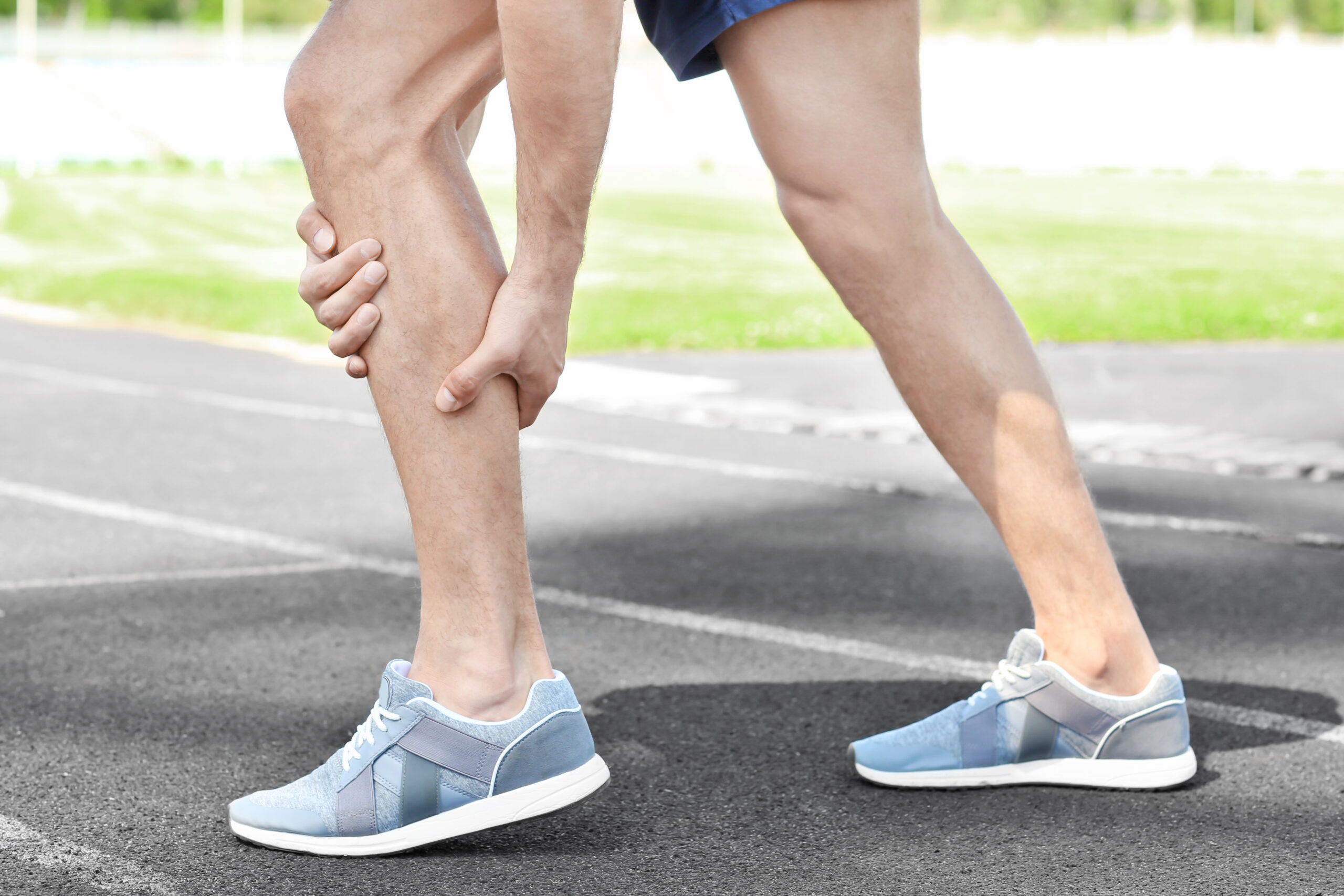
Shin splints are a very common running-related injury, especially among beginners or runners who suddenly increase their training intensity. This condition occurs when repeated impact and stress place excessive load on the shinbone and the surrounding muscles, tendons, and connective tissue.
What are the symptoms
Shin splints usually cause a dull, aching pain along the front or inner part of the lower leg. The discomfort may start as a mild soreness at the beginning of a run and gradually become more intense as training continues. In more advanced cases, the area may feel tender to the touch, slightly swollen, or painful even when walking or resting.
What are the risk factors
- Sudden increases in running distance, speed, or training frequency
- Running on hard, uneven, or sloped surfaces
- Flat feet or high arches that affect how impact is absorbed
How is it treated
Treatment focuses on reducing stress on the lower legs while allowing the tissues to heal. This often includes temporarily reducing running, applying ice to manage inflammation, and performing targeted stretching and strengthening exercises for the calves and lower leg muscles. Podiatry rehabilitation is often used to assess and correct faulty movement patterns while improving lower limb biomechanics. This approach helps reduce the risk of recurrence and supports a safer, more confident return to training.
Ankle Sprains

Ankle sprains are one of the most common injuries seen in runners. It often happen especially during trail runs, races, or when training on uneven surfaces. They occur when the ligaments that support the ankle are stretched or torn after the foot rolls inward or outward suddenly. This can happen in a split second, but the resulting pain, swelling, and instability can disrupt daily movement if not treated properly.
What are the symptoms
An ankle sprain typically causes sudden pain around the ankle, followed by swelling, bruising, and tenderness. Many runners notice difficulty putting weight on the affected foot or a feeling that the ankle is unstable or weak. In more severe sprains, the ankle may feel stiff and painful even at rest, making walking or running uncomfortable.
What are the risk factors
- Running on uneven, slippery, or poorly maintained surfaces
- Poor ankle stability or previous ankle injuries
- Inadequate warm-up before running
- Weak muscles around the ankle and lower leg
How is it treated
Early care usually includes rest, ice, compression, and elevation to reduce inflammation. As the pain improves, podiatrists use rehabilitation to strengthen the ankle, improve balance, and restore normal movement. We also recommend supportive footwear or ankle braces to provide extra stability during recovery. Custom orthotics can also improve foot alignment and lower the risk of repeated sprains. It can help runners return to activity with greater confidence.
When Should Runners See a Podiatrist?
You should seek professional care if foot pain does not settle with rest, becomes worse when you stay active, or begins to affect how comfortably you walk or run. Early assessment helps shorten recovery time and reduces the risk of long-term or recurring problems. If you have already tried general treatment approaches, including physiotherapy, but your symptoms persist or keep returning, it may be time to consult a podiatrist for a more detailed foot and biomechanical assessment. Ongoing discomfort can indicate an underlying structural or movement-related issue that requires targeted podiatry care rather than waiting for it to resolve on its own.
- Foot fatigue, weakness, or a feeling of instability
- Ongoing or increasing swelling
- Unexplained bruising
- Numbness or tingling in the toes or foot
- Visible changes in foot shape or alignment
Get Professional Running Injuries Care at My FootDr
Running injuries can quietly build up over time, turning what starts as mild discomfort into persistent pain that limits your performance and daily movement. From heel and ankle pain to tendon strains and overuse injuries, timely podiatry care helps identify the real cause of the problem and guide proper recovery. With professional assessment, gait analysis, footwear advice, and targeted treatments, podiatrists support runners in healing effectively while reducing the risk of the same injury returning.
At My FootDr Singapore, whether you are dealing with recurring pain, recovering from an injury, or looking to prevent future problems, our team is here to help protect the foundation of your movement. If running pain is slowing you down, book your running injury assessment at My FootDr today!